What Your Front Door Says About Your Home (The Psychology of First Impressions)
You're walking up a path toward a home you've never visited before. Maybe it's a friend's new place, a potential property purchase, or simply delivering a package to someone down the street.
Before you knock, before you step inside, before you meet anyone—you've already formed an opinion. Not consciously. Not deliberately. But your brain has processed dozens of visual signals and rendered a verdict in mere seconds.
What triggered that instant judgment? More than anything else, it was probably the front door.
That single element—the threshold between outside and inside, public and private—communicates volumes about the home and the people who live there. Understanding this psychology transforms how we think about front door first impressions and the power of intentional entry design.
Why First Impressions Happen in Seconds
Our brains are pattern-recognition machines, evolved over millennia to make rapid assessments about our environment. This isn't a character flaw—it's survival programming. Our ancestors needed to quickly evaluate whether a space was safe, whether it belonged to friend or foe, whether resources awaited inside.
Modern psychology confirms what our instincts already know: humans form first impressions in as little as 50 milliseconds. That's faster than conscious thought can process.
What happens during that split-second assessment? Your brain evaluates visual cues against stored patterns and associations. Color triggers emotional responses. Scale suggests status and importance. Material quality signals care and investment. Condition indicates attention to detail—or lack thereof.
By the time you consciously register "nice door" or "something feels off," your subconscious has already catalogued dozens of micro-impressions and formed a preliminary judgment about the entire property.
Did you know? Research in environmental psychology shows that these initial impressions create a "halo effect" that colors everything we experience afterward. A positive entrance experience predisposes visitors to view the entire home more favorably—even rooms they haven't seen yet.
Have you ever walked into a home and felt immediately comfortable, without quite understanding why? That warmth didn't start inside. It began the moment you approached the door.
The Front Door as a Psychological Signal
Unlike windows, siding, or landscaping, the front door serves a unique psychological function. It's the designated crossing point—the intentional threshold where public space transitions to private sanctuary. This charged position gives the door outsized influence on perception.
The Door Communicates Personality
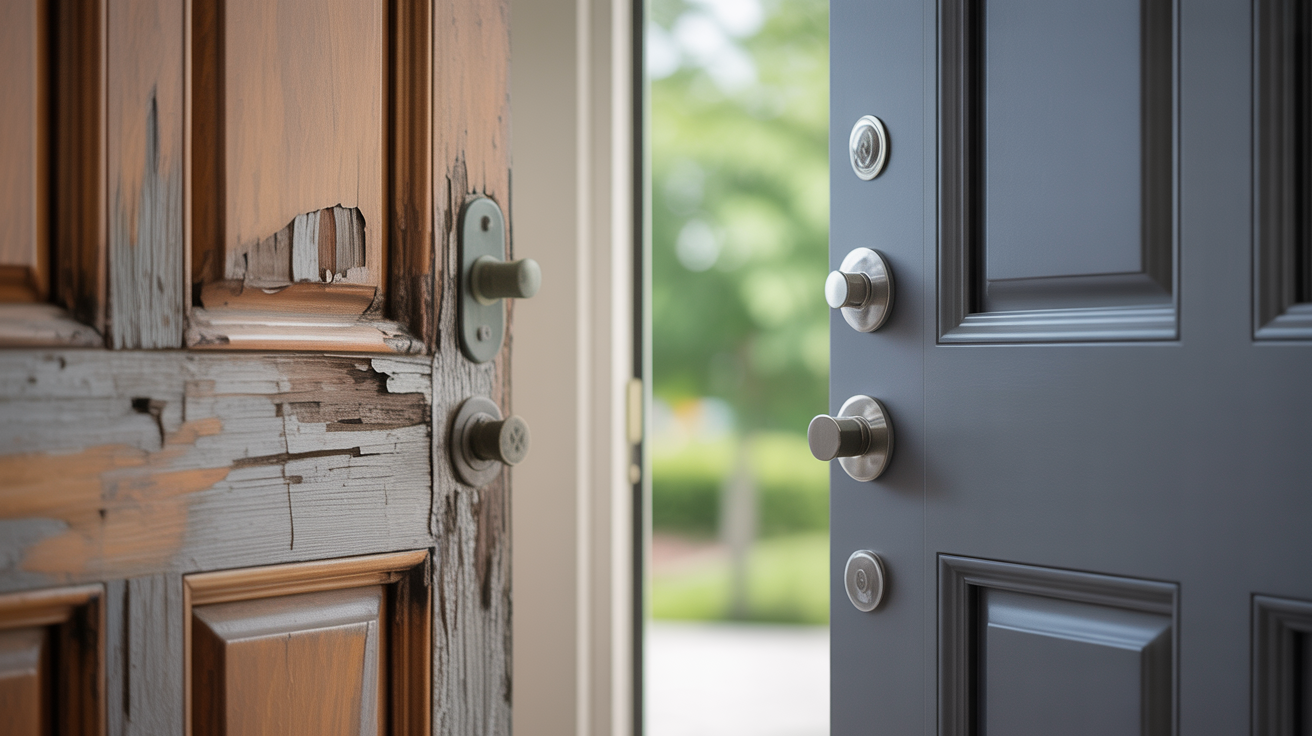
A bold, unusual door suggests creative residents unafraid of self-expression. A traditional door in excellent condition signals appreciation for heritage and attention to standards. A neglected door—peeling paint, weathered hardware—communicates either carelessness or stretched priorities.
What story does your front door tell about you?
The Door Signals Care
Visitors subconsciously reason: if the homeowners invested thought and resources into their entrance, they probably care about everything else too. The door becomes a proxy for unseen qualities—maintenance habits, aesthetic sensibilities, pride of ownership.
This association operates powerfully in real estate contexts. Homes with striking, well-maintained entry doors consistently receive higher perceived value assessments from buyers, even when comparable properties have similar square footage and amenities.
The Door Establishes Status
Fair or not, impressive entry doors signal economic and social status. This isn't about ostentation—it's about perceived investment. A custom entry door communicates that the homeowner chose to allocate resources toward a thoughtful, personalized entrance rather than accepting whatever came standard.
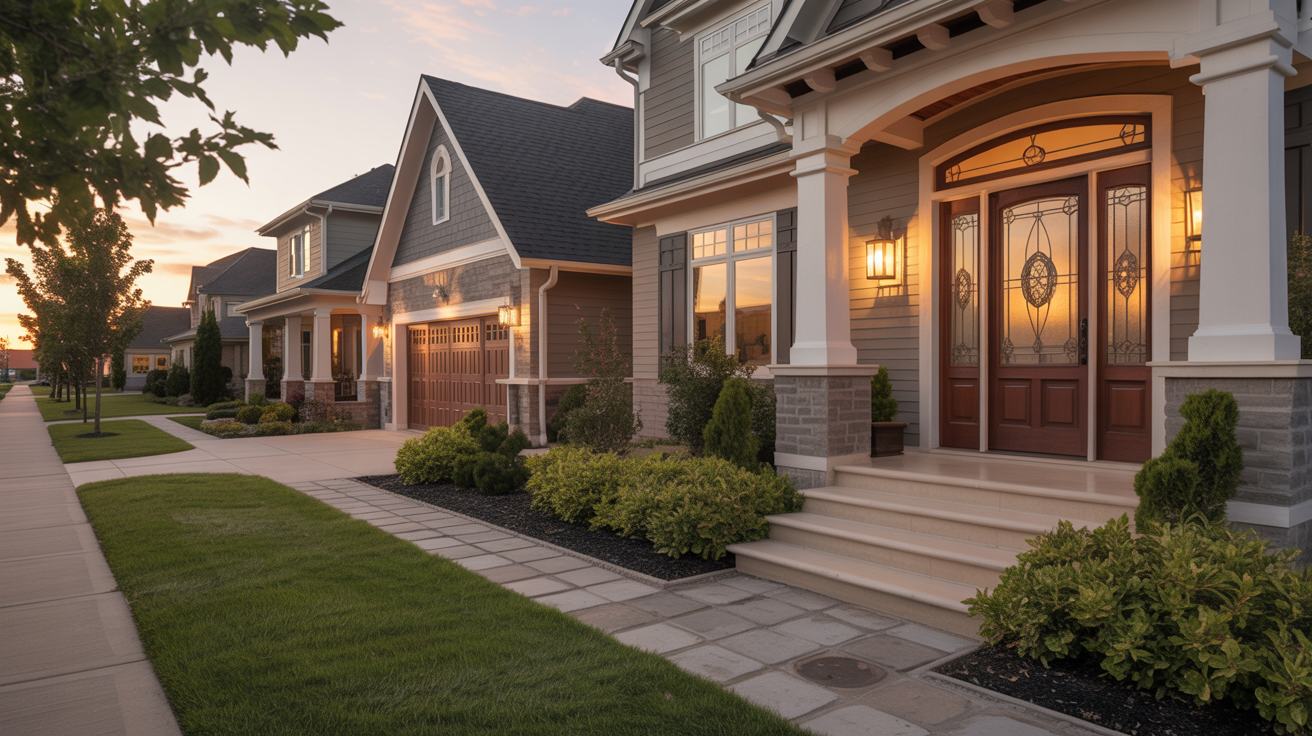
Throughout neighborhoods in Springfield, Nixa, and Ozark, you can observe this dynamic firsthand. Homes with distinctive, artisanal doors create immediate visual separation from surrounding properties—often commanding attention and admiration from passersby.
What Different Door Styles Communicate
Specific design elements trigger particular psychological associations. Understanding these connections helps homeowners make intentional choices about the impressions they create.
Color Psychology
Door color carries significant emotional weight. Deep, rich tones—navy, forest green, burgundy—suggest sophistication and establishment. Bright, bold colors—red, yellow, turquoise—signal confidence and creative energy. Neutral tones—black, white, natural wood—communicate timeless taste and restraint.
The surrounding architecture matters too. A bright door on a traditional home creates playful contrast. The same color on a contemporary structure might feel expected. Context shapes how we interpret color choices.
Design Insight: Research suggests that red doors create the strongest first impressions, triggering associations with warmth, welcome, and prosperity across many cultures. But "strongest" doesn't always mean "best"—the right choice depends on the story you want to tell.
Material Perception
Materials communicate instantly and powerfully. Solid wood suggests warmth, tradition, and natural authenticity. Steel conveys security and modern efficiency. Glass elements introduce transparency and contemporary openness. Fiberglass reads as practical and maintenance-conscious.
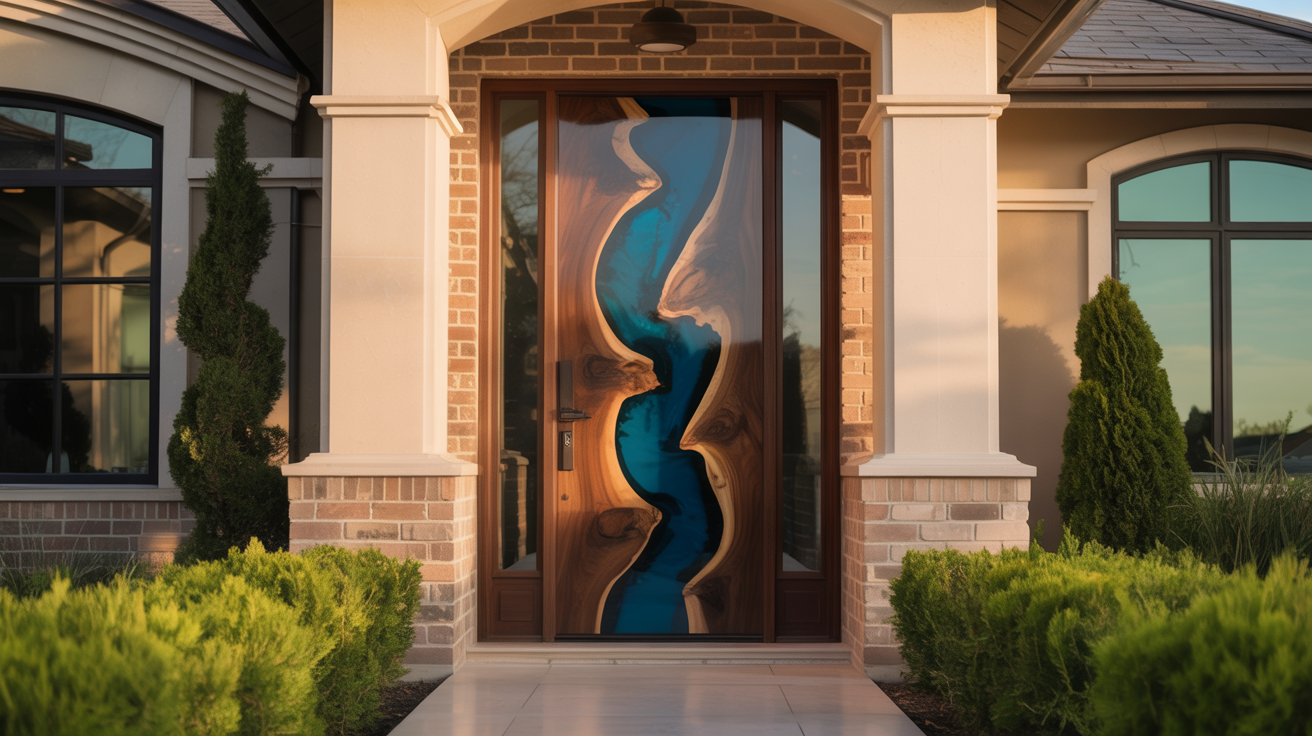
And then there's resin—a material that defies easy categorization. Custom resin doors create intrigue precisely because they're unexpected. Visitors encounter something they can't immediately classify, prompting closer attention and deeper engagement.
For a detailed comparison of material perceptions, our guide to resin versus wood doors explores how each affects homeowner experience and visitor perception.
Texture and Tactile Invitation
Smooth surfaces suggest refinement and sophistication. Textured surfaces convey craftsmanship and authenticity. Carved or dimensional elements invite touch and closer inspection.
The most compelling doors often combine textures—perhaps smooth resin rivers flowing through richly grained wood, creating visual complexity that rewards extended viewing. This textural interplay signals that the door (and by extension, the home) has depth worth exploring.
Scale and Proportion
Door size relative to the facade communicates importance. A generous door says "welcome" with confidence. A proportionally small door might feel apologetic or unwelcoming, regardless of the actual entryway size.
Scale also affects perceived status. Larger doors historically signified wealth and prominence—a psychological association that persists today. But proportion matters more than absolute size. A door perfectly scaled to its architectural context feels "right" in ways that oversized or undersized alternatives cannot achieve.
Light Interaction
How a door handles light dramatically affects perception. Doors that absorb light flatly can feel heavy or dull. Those that reflect light dynamically create visual interest and energy. Translucent or backlit elements suggest innovation and artistry.
Luxury front doors increasingly incorporate materials that interact with changing light throughout the day. Morning sun produces different effects than afternoon light or evening illumination. This temporal variation keeps the entrance visually engaging rather than static.
Why Custom Doors Feel More Trustworthy Than Standard Doors
Here's a psychological truth that goes beyond aesthetics: custom work creates trust.
When visitors encounter a clearly mass-produced, catalog-standard door, they register "ordinary" even if they don't articulate it consciously. The door matches thousands of others. It required no particular thought or investment beyond selecting from available options.
A custom door communicates something fundamentally different. It says the homeowner cared enough to envision something specific, invested resources to bring that vision to life, and worked with craftsmen who could execute the design with skill.
This perception of care and intentionality transfers to assumptions about the homeowner. If they approached their entrance this thoughtfully, visitors reason, they probably approach other aspects of life—business dealings, relationships, responsibilities—with similar care.
Is that fair? Perhaps not entirely. But understanding this psychological dynamic helps explain why architectural doors create impressions that standard alternatives simply cannot match.
Our exploration of why resin doors represent the future of home design examines how customization is reshaping homeowner expectations across the market.
Resin Doors and Emotional Design Impact
Among all door materials, resin creates uniquely powerful emotional responses. Understanding why illuminates the psychology of entry doors more broadly.
Depth Creates Fascination
Traditional door surfaces are essentially two-dimensional—flat planes with applied color or texture. Resin doors introduce genuine three-dimensional depth. Light penetrates the translucent material, revealing layers, colors, and patterns that reward extended viewing.
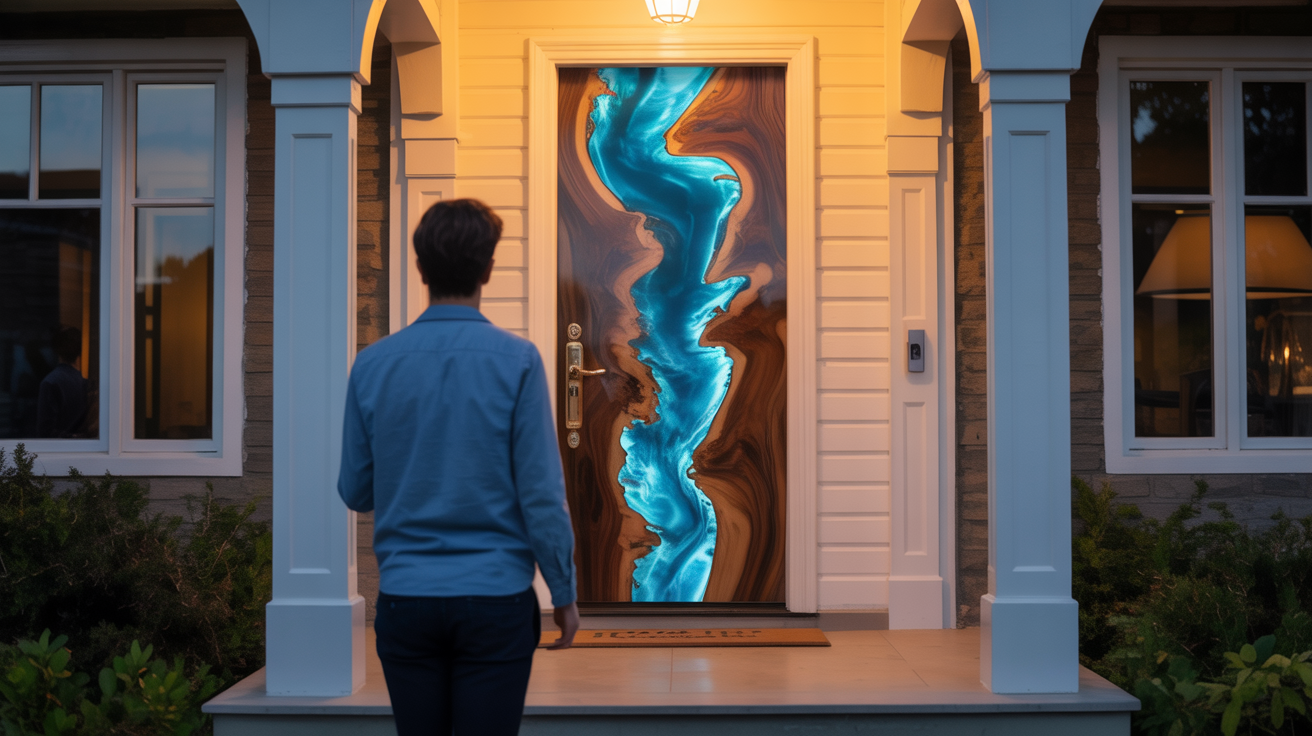
This depth triggers something primal in human perception. We're drawn to complexity that reveals itself gradually. The eye returns to resin doors repeatedly, finding new details with each look. That visual engagement creates stronger, more positive impressions than static surfaces can achieve.
Organic Movement Resonates
The flowing, organic patterns characteristic of resin work mirror forms found in nature—river currents, cloud formations, mineral veins. These natural associations trigger calming, positive emotional responses rooted deep in human psychology.
Visitors approaching a resin door often report feeling drawn in, curious, even mesmerized. That emotional engagement transforms a functional threshold into an experience—exactly what thoughtful homeowners want their entrance to achieve.
Uniqueness Signals Value
Every resin pour creates unrepeatable patterns. No two doors can ever be identical. This inherent uniqueness signals authentic craftsmanship and genuine value in ways mass-produced alternatives cannot replicate.
Homeowners who understand curb appeal psychology recognize this distinction. A door that exists nowhere else in the world creates different impressions than one shared with countless other homes.
Looking for inspiration? Our collection of stunning resin door ideas showcases the range of emotional impacts different designs can create.
Pro Design Tips to Improve First Impressions Instantly
Ready to transform how visitors perceive your home? These practical strategies create immediate impact.
Clean and maintain relentlessly. Even the most beautiful door fails if it's dirty, weathered, or surrounded by neglected hardware. Regular cleaning and touch-ups signal ongoing care.
Upgrade hardware thoughtfully. Door handles, knockers, and house numbers create their own micro-impressions. Quality hardware elevates perception of the entire entrance. Worn or cheap hardware undermines even beautiful doors.
Consider the complete approach. Your door doesn't exist in isolation. The walkway, lighting, landscaping, and porch elements all contribute to the arrival experience. Design the journey, not just the destination.
Light your entrance properly. Evening and nighttime visitors form impressions too. Proper lighting showcases your door while creating warmth and security. Poor lighting hides your investment and suggests inattention.
Create visual hierarchy. Guide the eye toward your door through thoughtful landscaping, pathway design, and architectural elements. The door should feel like the natural focal point of the approach.
Match door style to architectural context. Bold doors work best when they feel intentional rather than jarring. Consider how your entry relates to your home's overall aesthetic before making dramatic changes.
Invest in quality over trends. Trendy doors feel dated quickly. Classic craftsmanship with timeless materials maintains positive impressions for decades.
Design Insight: Real estate professionals consistently report that upgraded entry doors offer among the highest returns on investment for home improvements. The psychology of first impressions translates directly into perceived property value.
Our comprehensive guide to choosing the perfect resin door walks through considerations for creating maximum curb appeal impact.
Frequently Asked Questions
Does door color really affect home value?
Research consistently shows that door color influences buyer perception. Homes with black, charcoal, or deep blue doors often photograph better and create stronger first impressions online—increasingly important given that most buyers first encounter properties through listing photos. However, the "right" color depends on your home's overall palette and architectural style. Context matters more than following generic color advice.
How quickly should I replace an outdated door?
If your door shows visible wear, damage, or obviously dated styling, prioritizing replacement makes sense—especially if you're considering selling. That said, "outdated" is subjective. Well-maintained solid wood doors from decades past often retain positive appeal precisely because they signal authenticity and quality craftsmanship. The key question: does your current door create the impression you want?
Can changing just the door really transform curb appeal?
Absolutely. Because the door occupies such psychological significance as the entry threshold, upgrading it creates disproportionate impact. We've seen modest homes in Nixa and throughout the Ozarks region completely transform their street presence with strategic door replacements—often achieving greater visual impact than more expensive improvements like siding or roofing.
What makes a door feel "welcoming" versus "intimidating"?
Several factors contribute. Warm colors feel more inviting than cool colors. Wood and natural materials read as warmer than metal. Glass elements suggest transparency and openness. Proper scale—not too small, not overwhelming—feels balanced. Adequate lighting eliminates shadows that might feel unwelcoming. But the strongest factor is often condition: a well-maintained door in any style feels more welcoming than a neglected door in a theoretically "friendlier" design.
Should my door match or contrast with my home's exterior?
Both approaches can succeed when executed thoughtfully. Matching creates harmony and sophisticated restraint—the door feels like a natural extension of the home. Contrasting creates visual interest and draws attention to the entrance—the door becomes a deliberate focal point. The choice depends on the impression you want to create and how much visual prominence you want your door to carry.
Your Door Speaks Before You Do
Every time someone approaches your home—friends, family, neighbors, delivery drivers, potential buyers—your front door delivers a message. That message shapes their expectations before they knock, their comfort as they wait, their assumptions about the life happening inside.
Most homeowners never consciously consider what their door communicates. The entrance happened to come with the house, or they chose something quickly without deeper thought. The door exists. It functions. Why think more about it?
But now you understand the psychology. You know that front door first impressions operate below conscious awareness, shaping visitor perception in ways that influence everything that follows. You recognize that your door is constantly communicating—whether you've crafted that message intentionally or left it to chance.
Families throughout Springfield, Branson, Nixa, and the surrounding Missouri communities are discovering how thoughtful entrance design transforms both daily experience and long-term property value. They're moving beyond functional doors toward artisanal statements that reflect who they are and how they want to be perceived.
What Do You Want Your Front Door to Say About Your Home?
That question deserves genuine consideration. Do you want visitors to feel welcomed? Impressed? Intrigued? Reassured? The answer shapes everything—from color and material choices to scale and styling decisions.
Once you know the impression you want to create, working with skilled craftsmen brings that vision to life. Custom resin doors offer remarkable flexibility for expressing personality, establishing presence, and creating curb appeal psychology that serves your goals perfectly.
Our team has been crafting custom entry doors for homeowners throughout Nixa, Springfield, Ozark, Branson, and the broader Ozarks region. We understand that every home—and every homeowner—has unique stories to tell. Our role is translating those stories into door designs that communicate exactly what you want visitors to feel and perceive.
What do you want your front door to say about your home?
Work with our craftsmen in Nixa, MO to design an entry door that leaves a lasting impression.
Call 417-224-8734 or request a free consultation today.
Let's create an entrance that speaks for itself.
Tags
Ready to Create Your Custom Resin Door?
Let's bring your vision to life with a one-of-a-kind custom resin door