Resin vs. Wood Doors — Which One Is Right for Your Home?
Choosing the perfect door can dramatically impact curb appeal, home value, and everyday satisfaction. Your front door is often the first architectural element visitors notice, making it a critical design decision for any homeowner. Wood doors have been the traditional choice for generations, but custom resin doors have stepped into the spotlight as a compelling modern alternative. If you're comparing these two popular options, here's everything you need to know to make an informed decision for your Nixa, Springfield, or Ozark home.
Traditional Wood Doors: The Classic Choice
Wood doors remain beloved for their authenticity, natural beauty, and timeless appearance. There's something inherently appealing about genuine wood grain and the craftsmanship tradition it represents. Traditional wood doors offer warmth and character that resonates with many homeowners, natural grain patterns that create organic visual interest, and a classic aesthetic that fits traditional, craftsman, colonial, and many other design styles.
Quality wood doors, particularly those crafted from premium hardwoods like mahogany, oak, or cherry, can be absolutely stunning. They've graced home entrances for centuries and continue to be popular in traditional and historical home renovations. The tactile quality of wood and its natural variations make each door unique in its own right.
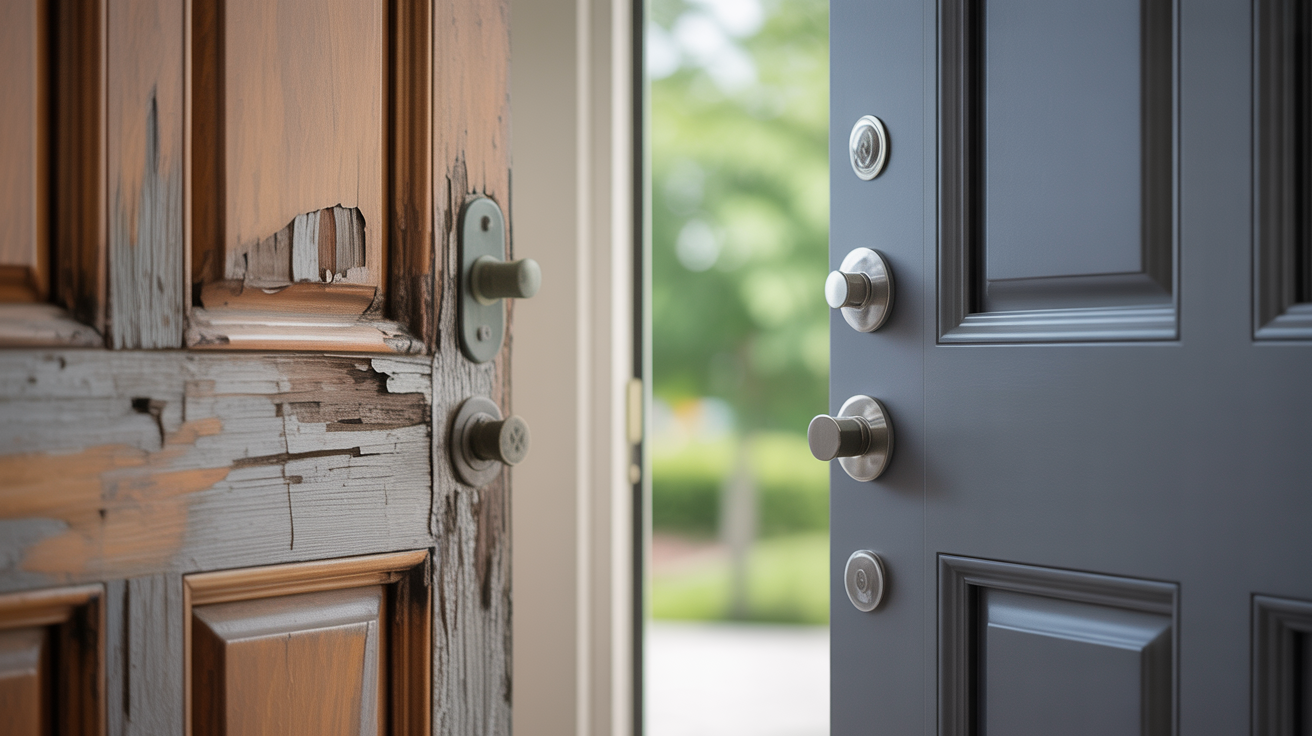
However, despite their aesthetic appeal, traditional wood doors come with significant drawbacks that modern homeowners must consider. Wood doors are particularly prone to warping in high humidity conditions—a serious concern in Missouri's climate where summer humidity regularly exceeds 70 percent. They require ongoing maintenance including regular staining or painting, weather-stripping replacement, and protective treatments to prevent moisture damage.
Additionally, wood doors can fade or crack over time when exposed to direct sunlight and weather extremes. They're more vulnerable to pest damage including termites and carpenter bees, especially in regions where these insects are prevalent. The dimensional instability of wood means doors may stick in summer and gap in winter as the material expands and contracts with temperature and moisture changes. Over time, these issues can compromise the door's appearance, energy efficiency, and structural integrity.
Resin Doors: The Modern Performance Upgrade
Custom resin doors, especially resin and wood hybrid designs, offer a powerful combination of aesthetic beauty and superior performance characteristics. Modern epoxy resin technology has evolved to create door materials that address every major shortcoming of traditional wood while adding new design possibilities that wood alone cannot achieve.
Benefits of custom resin doors include fully customizable designs with virtually unlimited color and pattern options, zero warping or shrinking regardless of humidity or temperature fluctuations, excellent weather and UV resistance that maintains appearance for decades, extremely easy cleaning and maintenance compared to wood, and long-lasting finishes in both glossy and matte options that don't require refinishing.
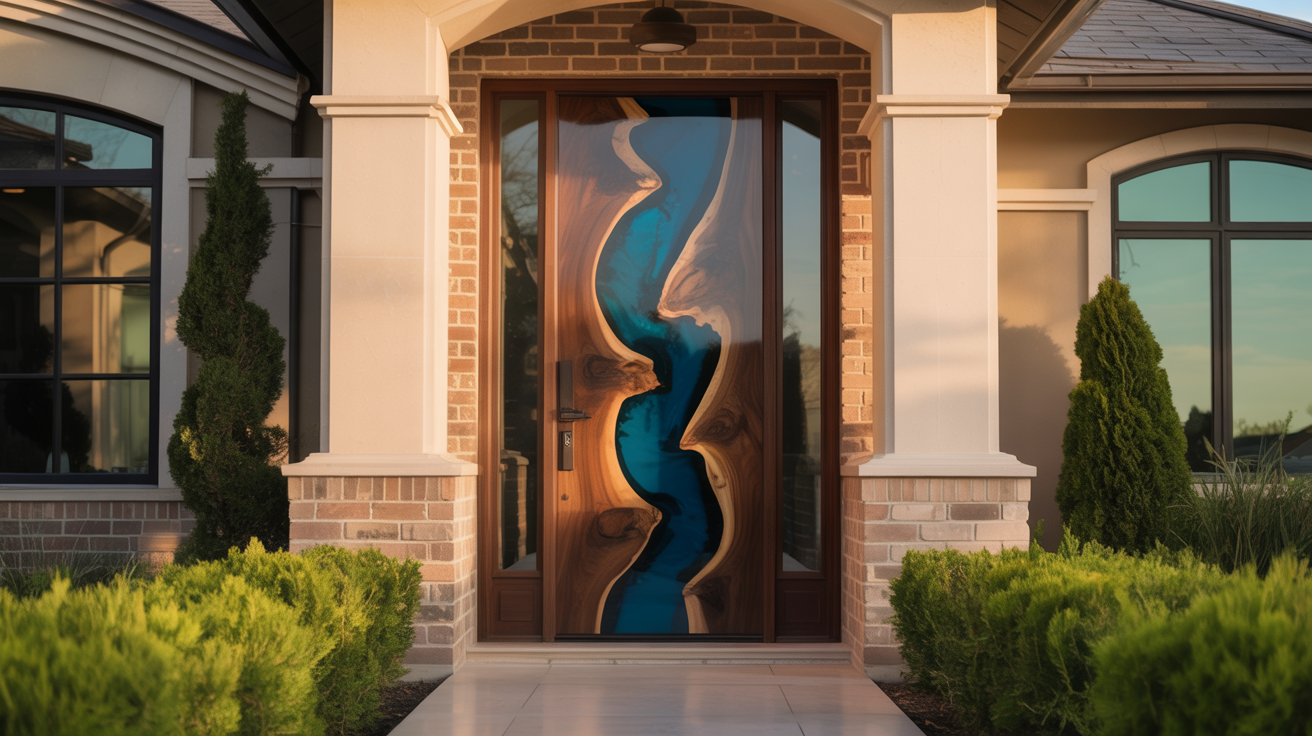
Perhaps most exciting for design-minded homeowners, resin enables aesthetic possibilities impossible with wood alone. You can achieve translucent colors that glow when backlit, create dramatic rivers of colored resin flowing through natural wood, embed materials like stones, shells, or metallic elements within the door, sculpt artistic patterns and three-dimensional effects, and develop custom colorways that precisely match your home's palette.
The artistic freedom offered by epoxy resin door design transforms what was traditionally a purely functional element into a genuine art piece. Homeowners working with skilled resin artisans in the Ozarks region are creating doors that serve as the focal point of their home's exterior design—conversation pieces that elevate the entire property's aesthetic.
Comprehensive Performance Comparison
When comparing resin versus wood doors across key performance metrics, the differences become clear. In terms of durability, wood offers moderate performance that varies by species and quality, while resin provides excellent long-term durability with consistent performance over decades.
Weather resistance shows even more dramatic differences. Wood has low natural resistance requiring protective treatments and ongoing maintenance, whereas resin provides high inherent resistance to moisture, temperature extremes, and UV radiation without special treatments.
Customization options heavily favor resin. Wood offers limited variations constrained by species characteristics and staining options, while resin delivers unlimited design possibilities with custom colors, patterns, embedded elements, and artistic effects.
The maintenance comparison is equally significant. Wood doors require high maintenance including regular refinishing, weather-stripping, and protective treatments, while resin doors need only occasional cleaning with standard household products—no refinishing required.
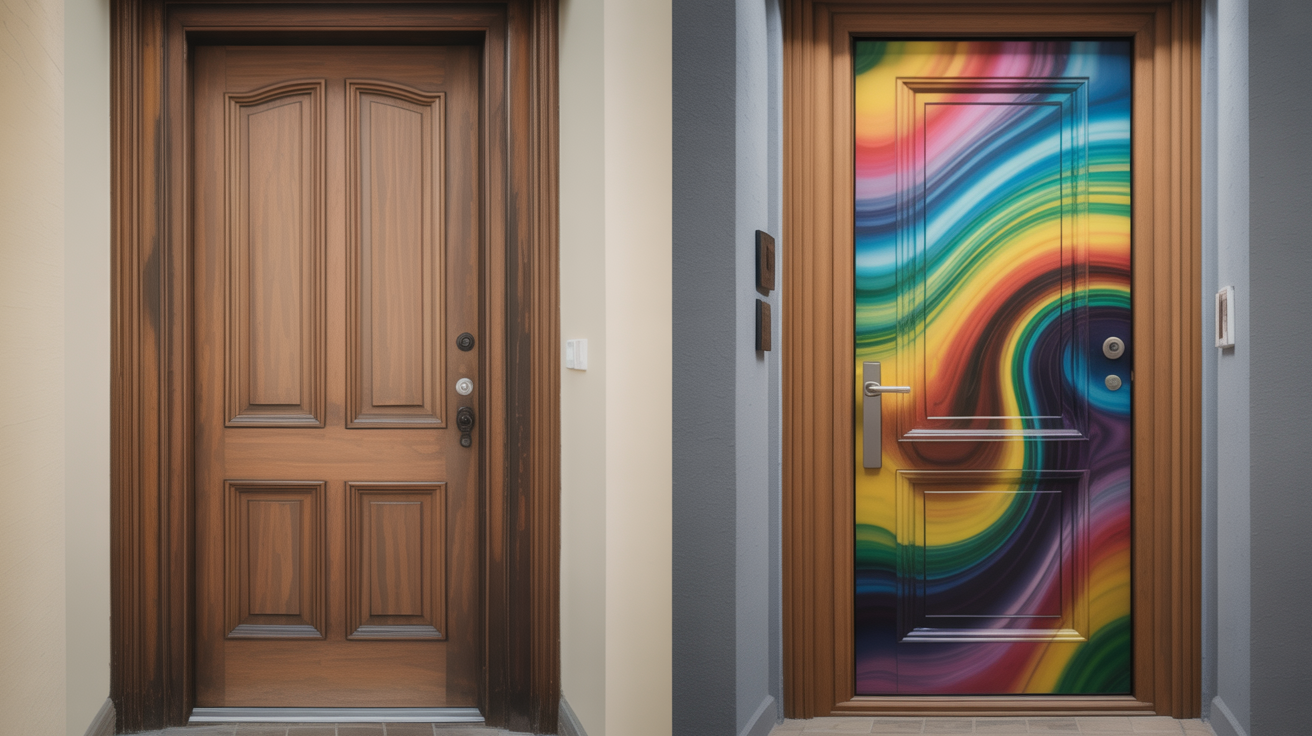
Visual appearance offers different strengths. Wood provides a classic, organic aesthetic with natural grain patterns valued in traditional design, while resin offers artistic and modern aesthetics ranging from subtle elegance to bold statement pieces.
Longevity considerations show wood's performance varies significantly based on climate, maintenance, and original quality, while resin provides consistent long-term performance with stable appearance and structural integrity over time.
Cost Considerations and Value Proposition
Initial cost comparisons between quality wood doors and custom resin doors often surprise homeowners. While premium hardwood doors can command very high prices—especially for exotic woods or intricate carvings—custom resin doors typically fall in the mid-to-upper price range depending on design complexity.
However, true cost analysis must consider total lifetime expenses. Wood doors require regular maintenance investments including refinishing every few years, weather-stripping replacement, hardware maintenance, and potential repairs for warping or damage. These costs accumulate substantially over decades of ownership.
In contrast, resin doors require minimal ongoing investment beyond basic cleaning. The long-term cost equation often favors resin substantially when you factor in reduced maintenance, longer effective lifespan, better energy efficiency through superior sealing, and maintained appearance without refinishing.
Climate Suitability for Missouri Homes
Missouri's challenging climate presents particular considerations for door selection. The region experiences humid summers with temperatures regularly exceeding 90 degrees, cold winters with temperatures dropping below freezing, dramatic temperature swings between seasons, significant precipitation including severe storms, and high seasonal humidity fluctuations.
Wood doors struggle in these conditions. The humidity causes swelling and warping, temperature extremes stress the material causing cracking, moisture infiltration leads to rot and decay over time, and the expansion/contraction cycle compromises sealing and fit.
Custom resin doors excel in Missouri's climate. The material remains dimensionally stable regardless of humidity, shows no degradation from temperature extremes, maintains perfect seal and fit year-round, and provides superior insulation properties that improve home energy efficiency.
Environmental and Sustainability Considerations
Environmentally conscious homeowners often assume wood is the greener choice, but the reality is more nuanced. Yes, wood is a natural material, but consider the ongoing environmental cost of maintenance products including stains, sealers, and paint containing VOCs, the energy consumed in regular refinishing, the eventual disposal when deteriorated wood requires replacement, and the use of tropical hardwoods potentially sourced from endangered forests.
Modern epoxy resin doors offer surprising sustainability benefits, especially when incorporating reclaimed wood. Many resin door projects use salvaged lumber that would otherwise be discarded, the long lifespan reduces replacement frequency and associated environmental impact, modern resins increasingly use bio-based formulations with reduced environmental footprint, and the minimal maintenance requirement eliminates ongoing chemical treatments.
Making Your Decision: Key Factors to Consider
When deciding between wood and resin doors, consider these critical factors. Your home's architectural style matters—traditional historical homes may lean toward wood for authenticity, while contemporary and modern styles often benefit from resin's artistic possibilities.
Your local climate significantly impacts performance—humid regions like Missouri favor resin's stability. Consider your maintenance willingness and budget—wood demands regular attention while resin requires minimal care. Think about your aesthetic priorities—do you value natural authenticity or artistic customization? Finally, evaluate your long-term plans—if you're staying long-term, resin's longevity and low maintenance provide substantial value.
The Verdict for Modern Homeowners
While both materials have merit, for most homeowners in 2026, particularly those in challenging climates like Missouri, custom resin doors offer superior overall value. The combination of artistic design freedom, exceptional durability, minimal maintenance requirements, and consistent long-term performance makes resin the smart choice for homeowners seeking both beauty and practicality.
That said, wood doors retain a place for specific applications—particularly in historical renovation projects where authentic materials are essential, or for homeowners who specifically prioritize traditional natural materials and are committed to the ongoing maintenance requirements.
Finding Quality Craftsmanship in the Ozarks
Whether you choose wood or resin, quality craftsmanship remains essential. For homeowners in Nixa, Springfield, Branson, and surrounding Missouri communities exploring custom resin door options, working with experienced local artisans ensures your door is properly designed for regional climate conditions, expertly fabricated using proven techniques, and professionally installed for optimal performance.
The best resin door craftsmen combine artistic vision with technical expertise, creating doors that not only look spectacular but also perform flawlessly for decades. They understand material properties, proper installation techniques, and design principles that result in doors serving as beautiful, functional art pieces that enhance your home's value and aesthetic appeal.
Final Recommendations
Choose traditional wood doors if you're restoring a historical property where authenticity is paramount, have a strong personal preference for natural wood aesthetics and are committed to ongoing maintenance, or are working within specific architectural guidelines requiring traditional materials.
Choose custom resin doors if you want a modern, durable, artistic door that truly stands out, live in a challenging climate with temperature and humidity extremes, prefer minimal maintenance requirements, value long-term cost efficiency, or desire completely custom designs tailored to your unique vision.
For most homeowners in 2026, particularly those building or renovating in the Midwest, resin clearly wins in both performance metrics and visual impact potential. The technology has matured to deliver exceptional results, and the artistic possibilities continue expanding as skilled artisans push creative boundaries.
Tags
Ready to Create Your Custom Resin Door?
Let's bring your vision to life with a one-of-a-kind custom resin door